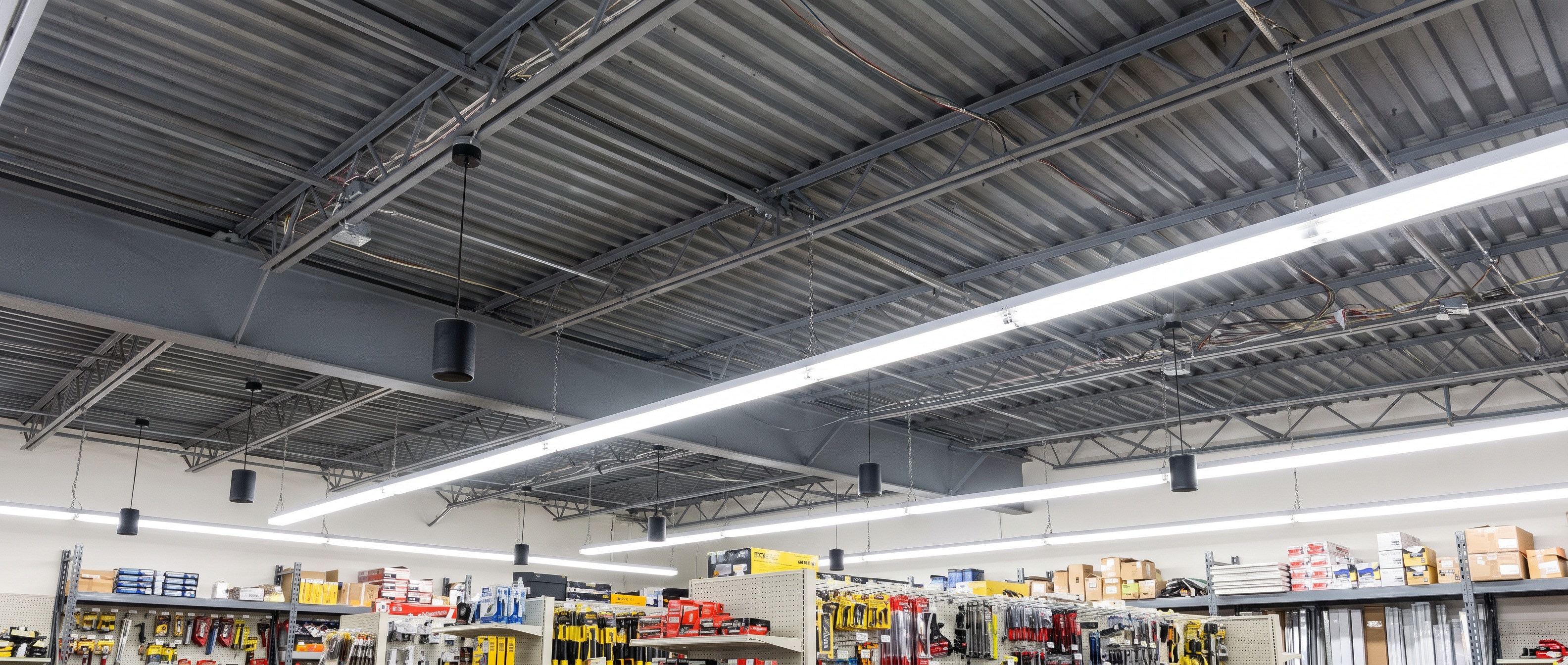
The instinct is to hang the screen where the most people will walk past it. That's a fair place to start, and traffic genuinely counts for something. It only answers half the question.
The other half is what a screen in that spot can say. A location with heavy traffic and moving customers supports one kind of content. A location where people are standing still supports a different kind. Neither is better than the other. They do different jobs, and a screen in a good spot running the wrong kind of content doesn't do either one.
What does a high-visibility spot do well?
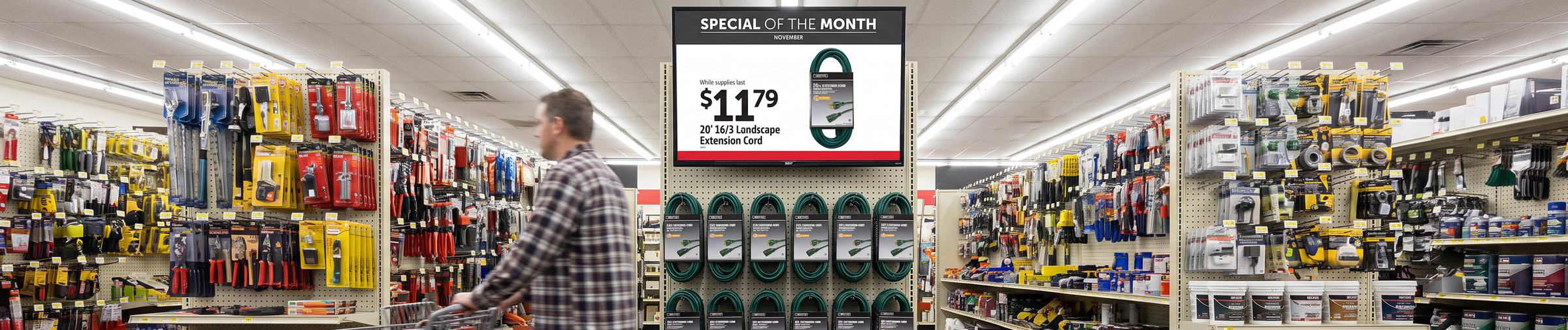
An endcap puts a screen in front of more people than anywhere else in the store, and it sits where the product already is.
A screen there works like a billboard. A few words, one image, one idea, readable at a glance by someone who isn't stopping to look. That's the right tool for a seasonal item, a promotion, a new product, or pointing customers toward a department they'd otherwise walk past. The entrance works the same way.
The constraint is time. Someone moving down an aisle gives a screen a second or two, so the test is whether the message survives being seen briefly from ten feet away. Anything that has to be read as a paragraph, or watched through to a conclusion, is wasted there no matter how many people pass it.
What does a counter do well?
Counters hand you something no aisle can: a customer who isn't going anywhere.
The paint counter is the clearest case, since mixing and shaking takes minutes and there's nothing else to do. The service desk is another, whether someone is waiting on a key, dropping off a screen to be repaired, or having a special order looked up. So is the checkout line on a Saturday morning, and the rental counter while paperwork gets filled out.
Several uninterrupted minutes changes what a screen is for. Short content tells a customer a product exists. Long content can show a project being done, which is a different proposition entirely. It's the difference between knowing the store sells deck stain and believing you could stain your own deck this weekend.
That's where the return is in a hardware store. A DIY video, a product demo, or a walkthrough of a technique can turn a customer who was curious into one who thinks the job is within reach, and a customer who leaves confident enough to start a project buys the materials for it. Usually more than once, since almost nobody gets the whole list on the first trip.
Do the screens play sound?
They run silent, which keeps them from competing with the music already playing in the store.
That matters most for the long-form content. A technique video has to carry without narration, through on-screen text, captions, or demonstration clear enough to follow with the sound off. Content produced for retail screens is generally built that way, and it's the thing to check when you're looking at a video and deciding whether it will work at a counter.
How many screens does a store need?
In a smaller store, one is a sensible place to start, and a counter is usually where it goes. It's also easier to judge honestly after a few months than three screens installed at once.
Larger stores have room for both kinds, and that's the better reason to add a second. A screen at an endcap and a screen at the paint counter aren't redundant. Some content plays well in either spot, like store branding or a current flyer, but the material that does the real work in each is different, and it's reaching a different customer at a different moment. Adding a second location of the same type does much less.
What's easy to get wrong on the mount?
Height is the common one. Screens tend to go up high, the way they do in a sports bar, which works when everyone is seated and looking up and doesn't work at all for a customer standing at a counter. Eye level for a standing adult is the target, and lower than instinct suggests.
Glare is the other. A screen facing a window or sitting under a skylight can wash out for part of the day, and the part of the day it fails is often the busiest one. Checking the sightline at three in the afternoon is easier than moving a mount later.
Where does the content come from?
The store supplies the screen, which is ordinary display hardware and doesn't need to be anything specialized.
The content comes from a library built for Do it Best members, covering product promotions, store services, DIY videos, and product demos. It works the same way the audio library does, in that most of what a store would want to show already exists and can be scheduled without producing anything.
Learn more about Do it Best Radio or get in touch and we'll talk through which spots in your store would do the most with a screen.