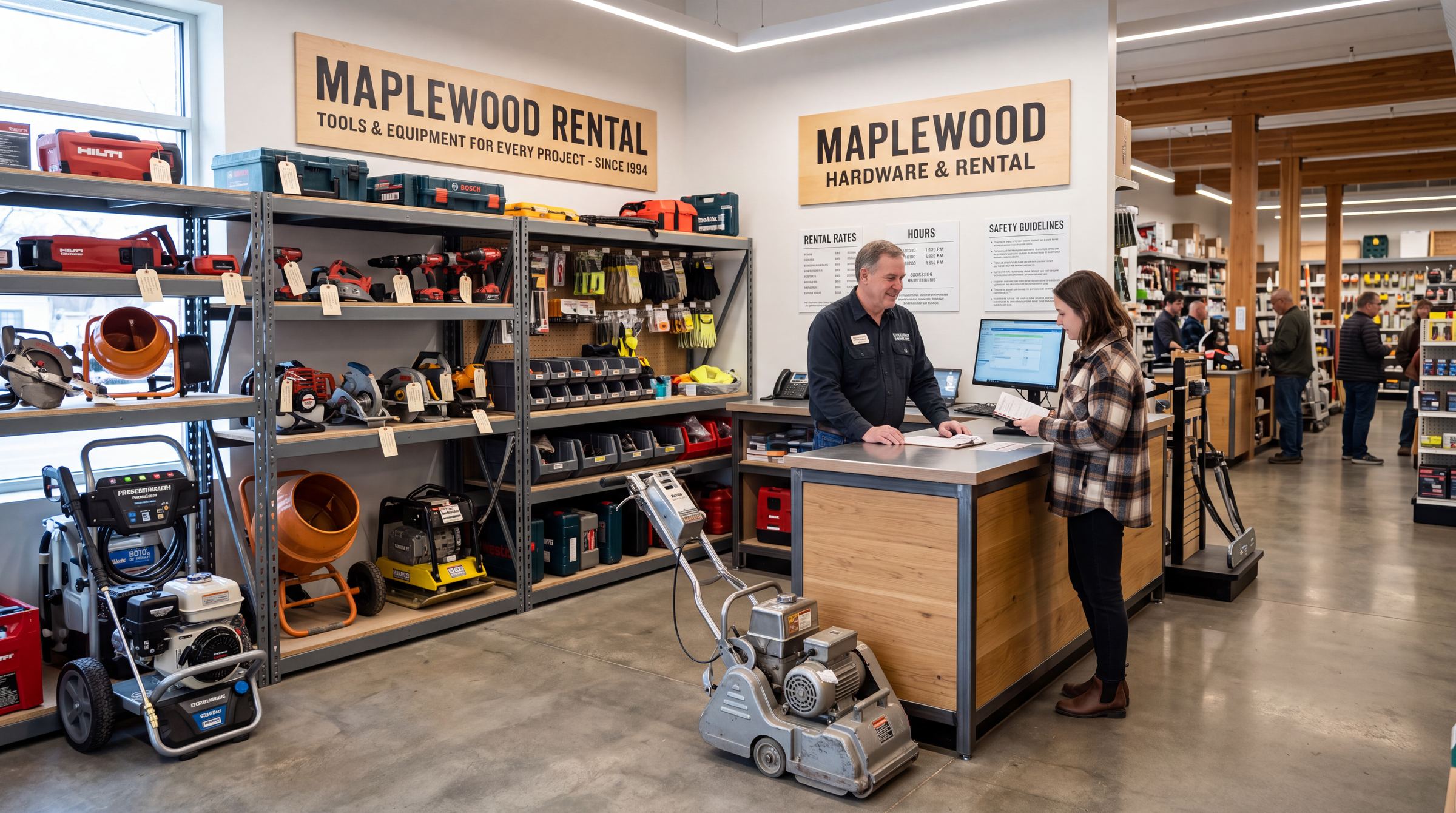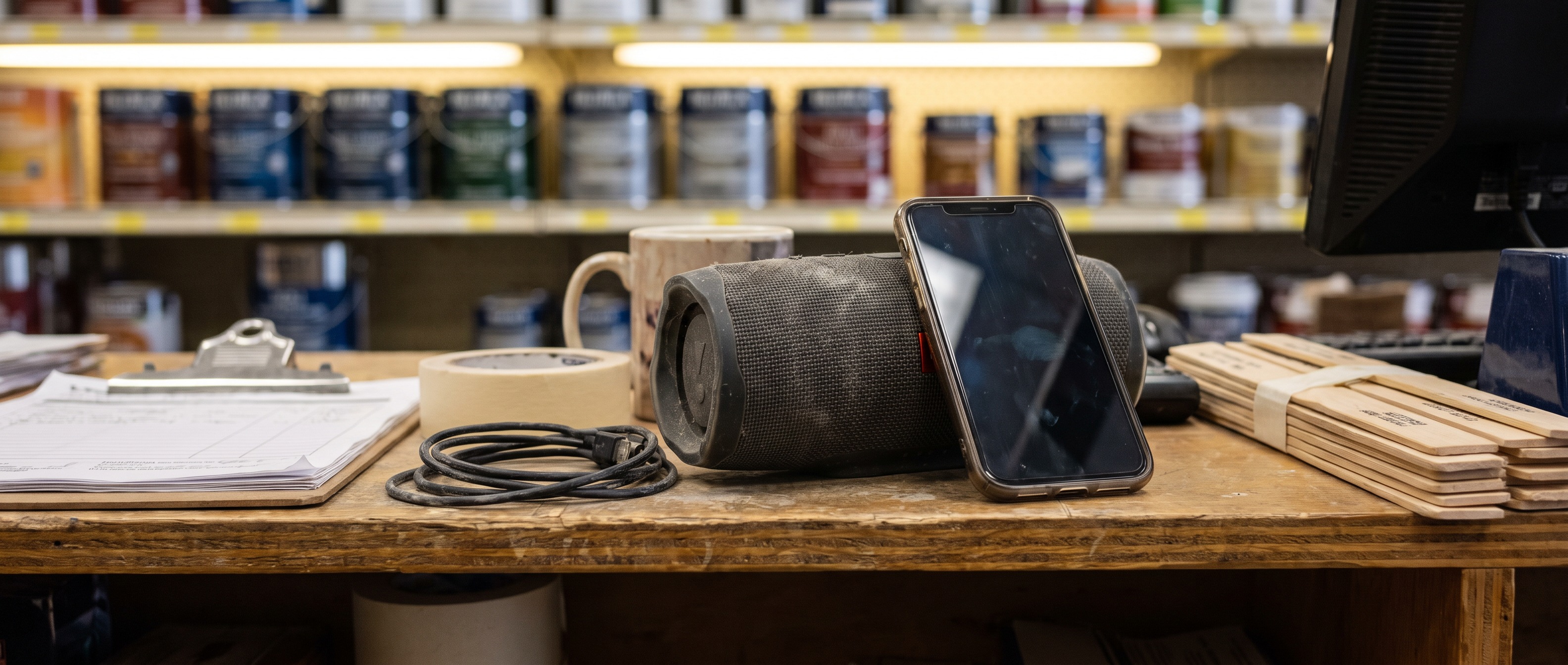
It usually starts small. Someone in paint pairs a phone to a Bluetooth speaker so the department isn't silent. It works, nobody objects, and within a few months it's simply how the store sounds. A year on there's a tablet behind the register running the same playlist from open to close.
Music played in a store is governed by copyright law, and playing it where customers can hear it generally requires a public performance license. That requirement is separate from whatever you pay for the music itself.
It's an easy thing to miss. Nothing about paying for a music subscription makes it obvious that it wouldn't cover the sales floor, and a store owner can reasonably assume the music is taken care of.
The distinction is simple: paying to listen to music personally doesn't license you to play it for customers.
Can you play Spotify or Apple Music in your store?
No. Consumer streaming subscriptions are intended for personal listening, and playing them for customers falls outside what those subscriptions permit. Spotify's terms grant permission for personal, non-commercial use of its service and content. Apple's terms likewise limit its services and content to personal, noncommercial purposes.
The device makes no difference. Phone, tablet, laptop, or smart speaker, the subscription still has the same restrictions.
Does paying for Premium change anything?
No. A paid tier adds listening features, such as ad-free music and downloads. It doesn't authorize playback on a sales floor. Paying for a family plan or using your own carefully selected playlist doesn't change that either.
Why isn't paying for the music enough?
Access to music and permission to perform it publicly are separate matters.
A personal streaming subscription lets you listen under the service's terms. Playing the music for customers also involves the public-performance rights held by the songwriters and publishers. Your personal subscription doesn't give your store that permission. Neither does buying a CD or a digital download.
It also doesn't depend on music being important to what you sell. Playing a song where customers can hear it generally constitutes a public performance, even if it's just background music. The store doesn't have to charge admission, advertise the music, or hold a special event.
There are therefore two questions to answer: does your music source permit business use, and are the necessary public-performance rights covered?
Who handles public-performance licensing?
Performing rights organizations, commonly called PROs, license public performances on behalf of songwriters and publishers. In the US, these include ASCAP, BMI, SESAC, and GMR.
Each represents its own repertoire. Having a license from one doesn't automatically provide permission for music represented by the others. Even songs recorded by the same artist can involve different organizations, depending on who wrote them. BMI's retail licensing guidance explains this distinction.
For a store owner, the practical question is whether the licensing covers the music actually playing in the store. A business music service with the appropriate coverage can handle that as part of the subscription.
Whose responsibility is it?
The business is responsible for ensuring its music use is properly licensed. This catches owners off guard when the music is coming from an employee's phone or from an account the owner doesn't manage.
BMI states that federal courts have held businesses responsible for obtaining the necessary permission, because the business authorizes the public performance and has a direct financial interest in the music being performed.
Whose subscription it is and who pressed play aren't the deciding factors. The music is playing on your floor, during your hours, for your customers.
How is music licensing enforced?
Performing rights organizations contact businesses about music licensing through letters and phone calls.
They also use investigators to visit businesses and document music being played without permission. A hardware store doesn't need to be a concert venue for its music use to attract attention.
If you receive a licensing inquiry, take it seriously. If you already use a business music service, contact your provider to confirm what it covers and help clarify the inquiry.
What are the potential costs?
Copyright infringement can carry substantial financial consequences. The ordinary statutory damages range is $750 to $30,000 per infringed work, with up to $150,000 available where a court finds willful infringement. These are potential court awards, not automatic charges for each song played. The law also allows reductions in certain cases of innocent infringement. Section 504 sets out the damages rules.
A licensing inquiry doesn't automatically mean a lawsuit. But getting properly licensed going forward doesn't necessarily resolve a claim about past use. It's a much easier issue to address before a letter arrives.
How Do it Best Radio handles it
Do it Best Radio includes public-performance licensing across ASCAP, BMI, SESAC, and GMR for the music supplied through the service at your subscribed location. That means the licensing for that music is handled as part of your subscription.
That coverage applies to the service's music. A separate employee playlist or another music source doesn't become covered simply because the store also subscribes.
There are practical benefits beyond licensing. Music selected for a retail environment helps keep the atmosphere appropriate and consistent, without depending on whoever happens to be working that day.
And the same system can tell customers about key cutting, propane exchange, equipment rentals, the contractor desk, and seasonal promotions. The music helps set the atmosphere; the announcements help customers discover more of what your store offers.
If your store's music setup grew out of someone's phone and a speaker, it's worth another look. You can learn more about Do it Best Radio or contact us with questions about your store's setup.
This article provides general information about US music licensing, not legal advice. Requirements depend on your store and how you use music. Consult your attorney about legal questions specific to your situation.